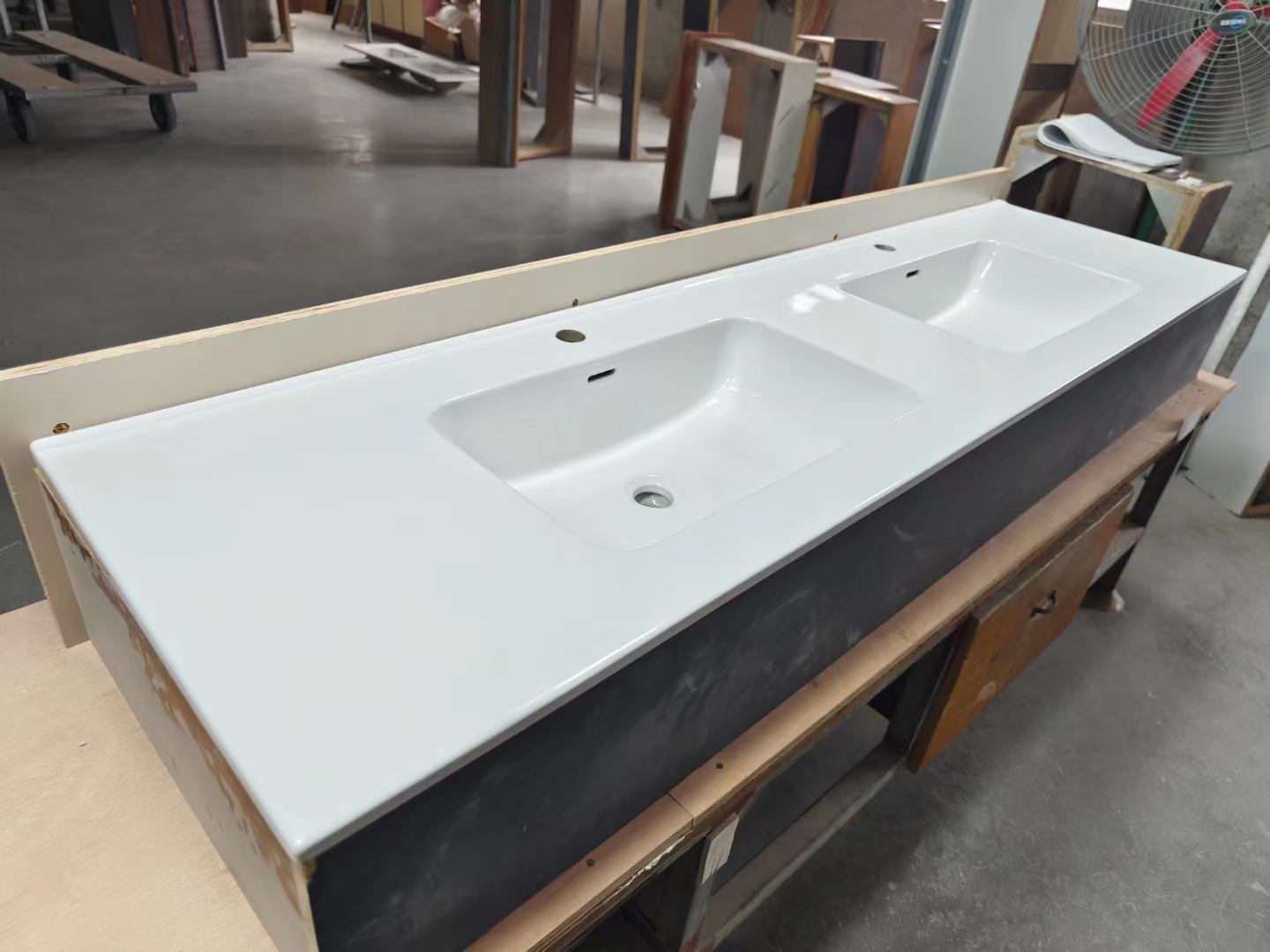
Top 8 Ceramic Wash Basins for 2026: A Practical Buyer’s Comparison
TL;DR• Ceramic wash basins vary widely in style, size, and installation type, making direct comparison essential before buying. • Key quality indicators include glaze density, water absorption rate, and certified testing to standards like EN 14688. • This guide covers eight options across countertop, inset, and cloakroom styles with a practical framework for choosing correctly.
Picking the wrong ceramic wash basin is a surprisingly easy mistake: sizes, tap-hole configurations, and installation types rarely align by accident. With EN 14688 setting the functional benchmark for washbasins across European markets, buyers now have clearer quality references than ever. This comparison matches eight ceramic basin options to real bathroom scenarios so you choose with confidence.
Why Choosing the Right Ceramic Wash Basin Matters
A ceramic bathroom sink is one of the hardest-working fixtures in any lavatory, yet the differences between options go far beyond appearance. Mounting style, nano-glaze quality, tap-hole placement, and basin dimensions all affect long-term performance. Choosing without comparing these variables carefully means costly retrofits later.
Top 8 Best Ceramic Wash Basins Compared for 2026
Each entry below covers key dimensions, tap-hole configuration, overflow provision, mounting type, finish quality, and ideal use case. Connecting dimensions follow EN 31 standardised guidance to ensure compatibility with standard wastes and vanity furniture.
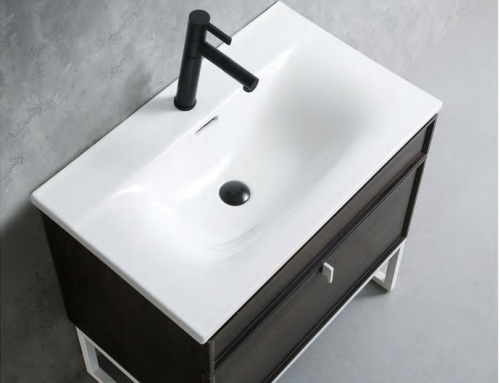
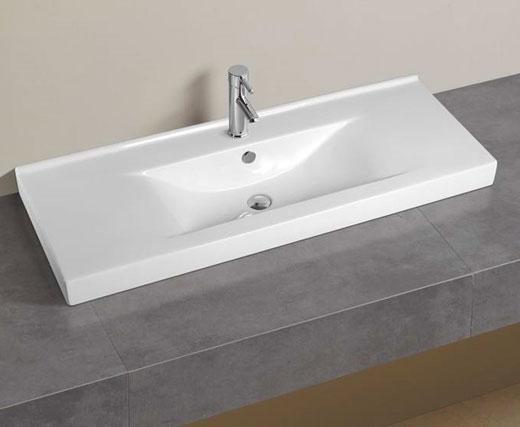
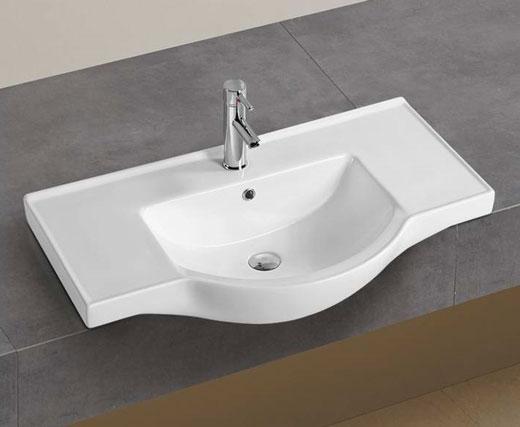
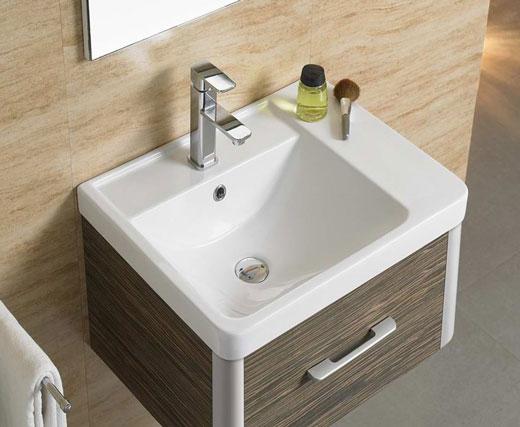
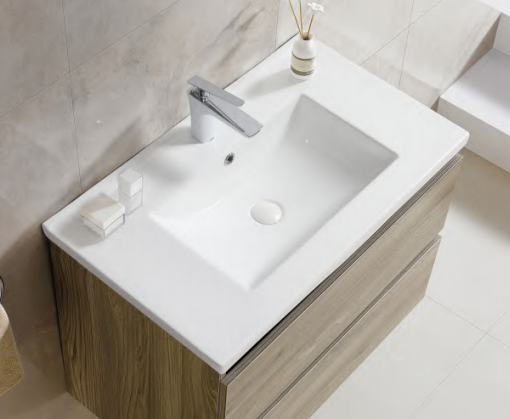
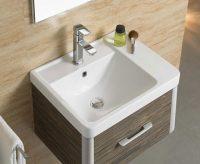
White Ceramic Mid-Edge Basin with Single Tap Hole and Overflow
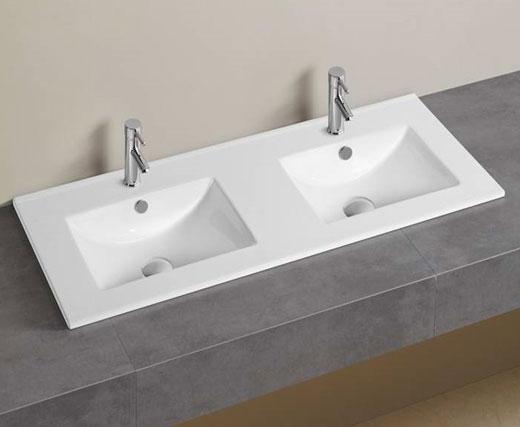
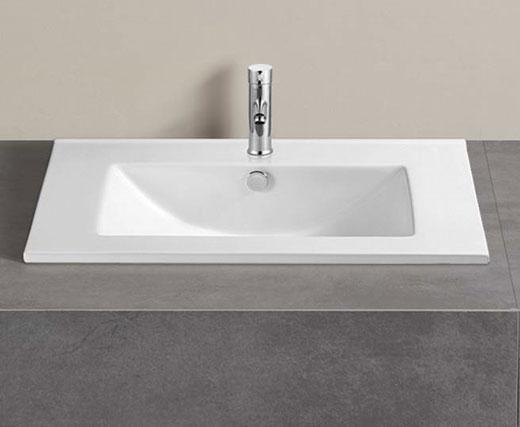
A mid-edge rim profile reduces splash while keeping the glazed surface easy to wipe clean. The single tap hole suits most standard chrome mixer configurations, and the integrated overflow hole protects against accidental flooding. This classic countertop ceramic wash basin suits cloakroom vanity units and en suites equally well. Positioned in the mid-range price bracket, it balances quality and value.
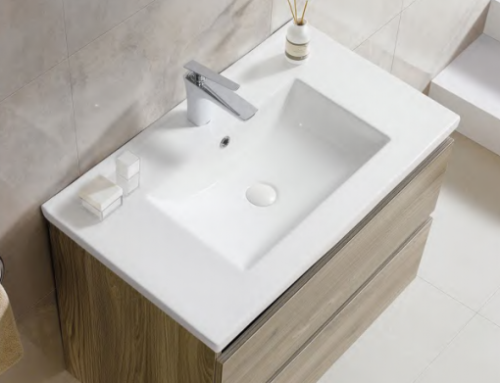
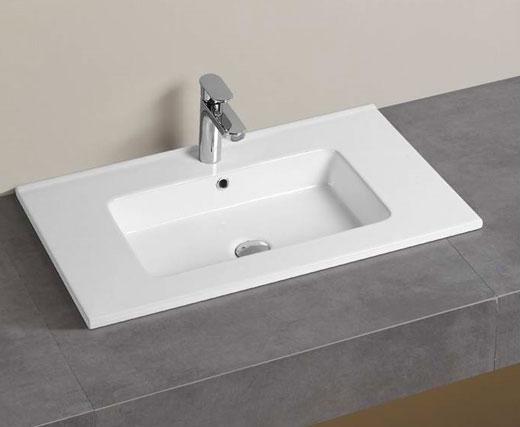
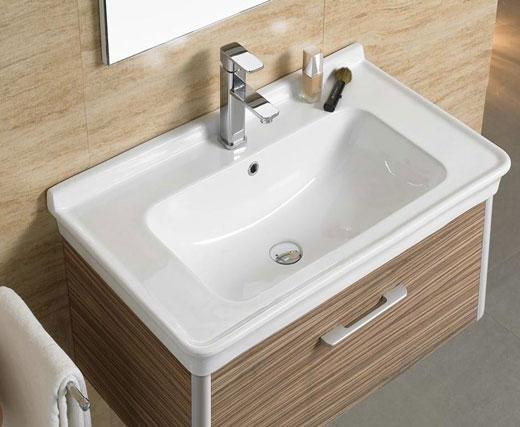
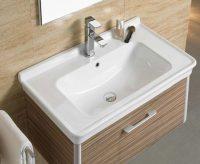
500mm Modern White Slim Inset Ceramic Wash Basin
At 500mm wide, this slimline inset basin fits neatly into compact vanity units without sacrificing bowl depth. The gloss white nano glaze finish resists staining, and the rectangular profile suits modern bathroom aesthetics. Inset basin installation requires a pre-cut countertop opening, so confirm worktop thickness and material compatibility before ordering. A budget-friendly option for smaller spaces.
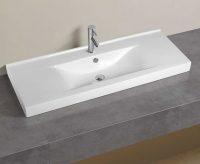
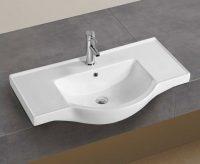
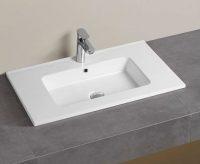
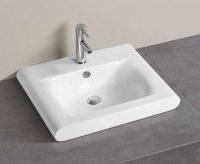
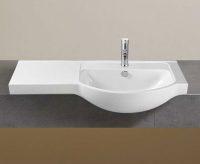
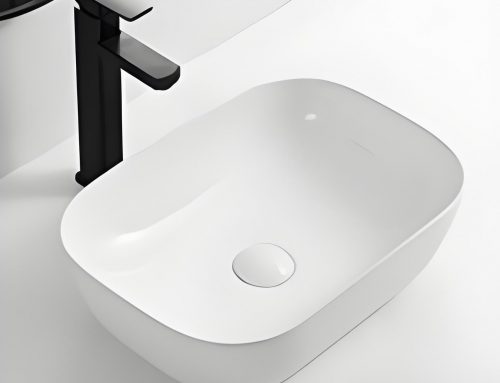
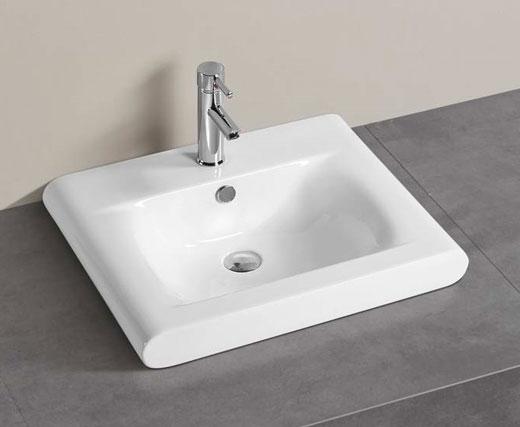
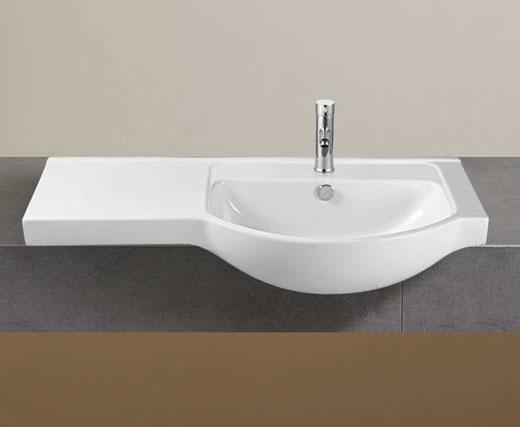
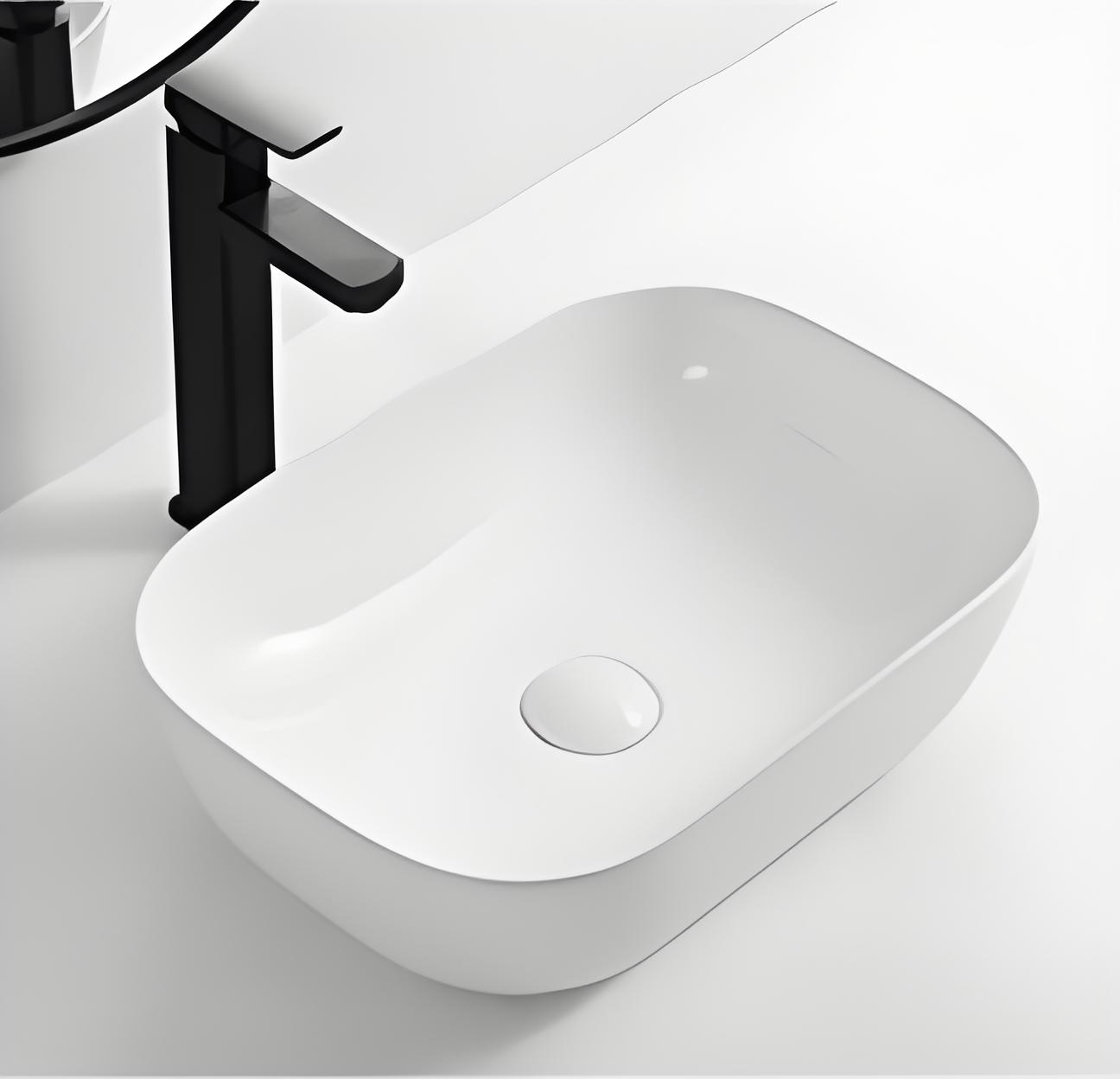
Modern Cloakroom Counter Top Ceramic Wash Basin (135x460x330mm)
At just 460x330mm with a 135mm height, this ultra-compact countertop vessel sink is purpose-built for tight cloakroom installations. The slimline rectangular bowl sits above the vanity surface, requiring a solid worktop for support. A single tap hole and pop-up waste included as standard simplify fitting. This budget-positioned basin delivers strong value for small spaces.
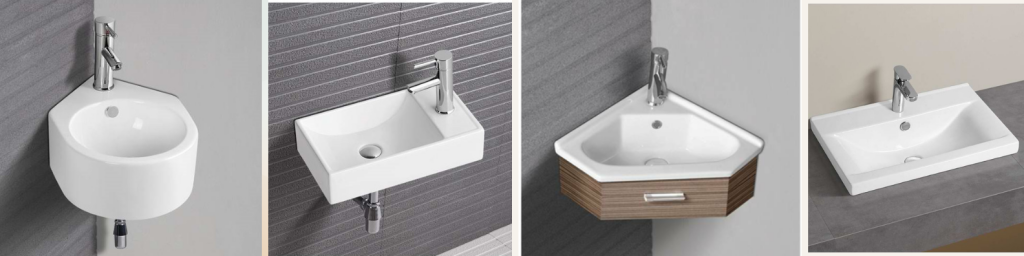
Compact Wall-Hung Cloakroom Basin (400x220mm)
A wall-mounted cloakroom basin at 400x220mm suits the narrowest en suite walls. Single tap hole, no overflow. The glazed surface resists staining well.
- Pros: Space-saving, easy floor cleaning beneath
- Cons: Requires solid wall fixings
Ideal for: Tight cloakrooms needing a wall-hung wash basin solution.
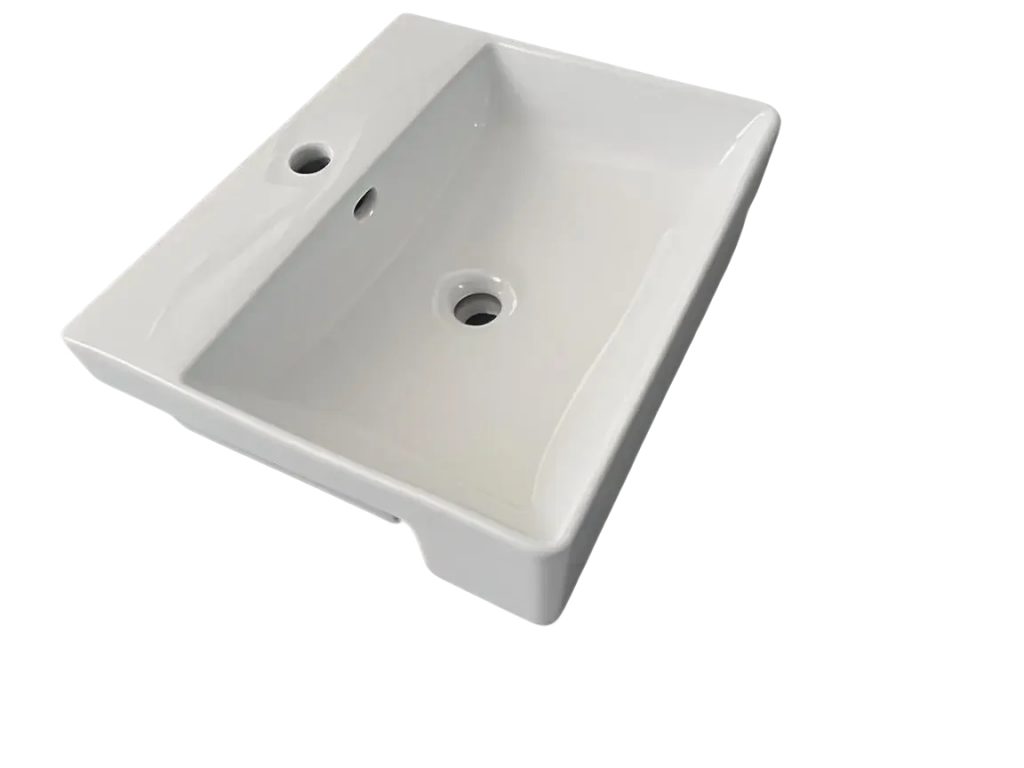
Semi-Recessed Rectangular Basin (550x370mm)
Partially inset into the vanity, this semi-recessed ceramic basin balances counter space with bowl depth. Gloss white finish, single tap hole, overflow included.
- Pros: Blends countertop and inset benefits
- Cons: Needs precise cabinet cutout
Ideal for: Medium family bathrooms with existing vanity units.
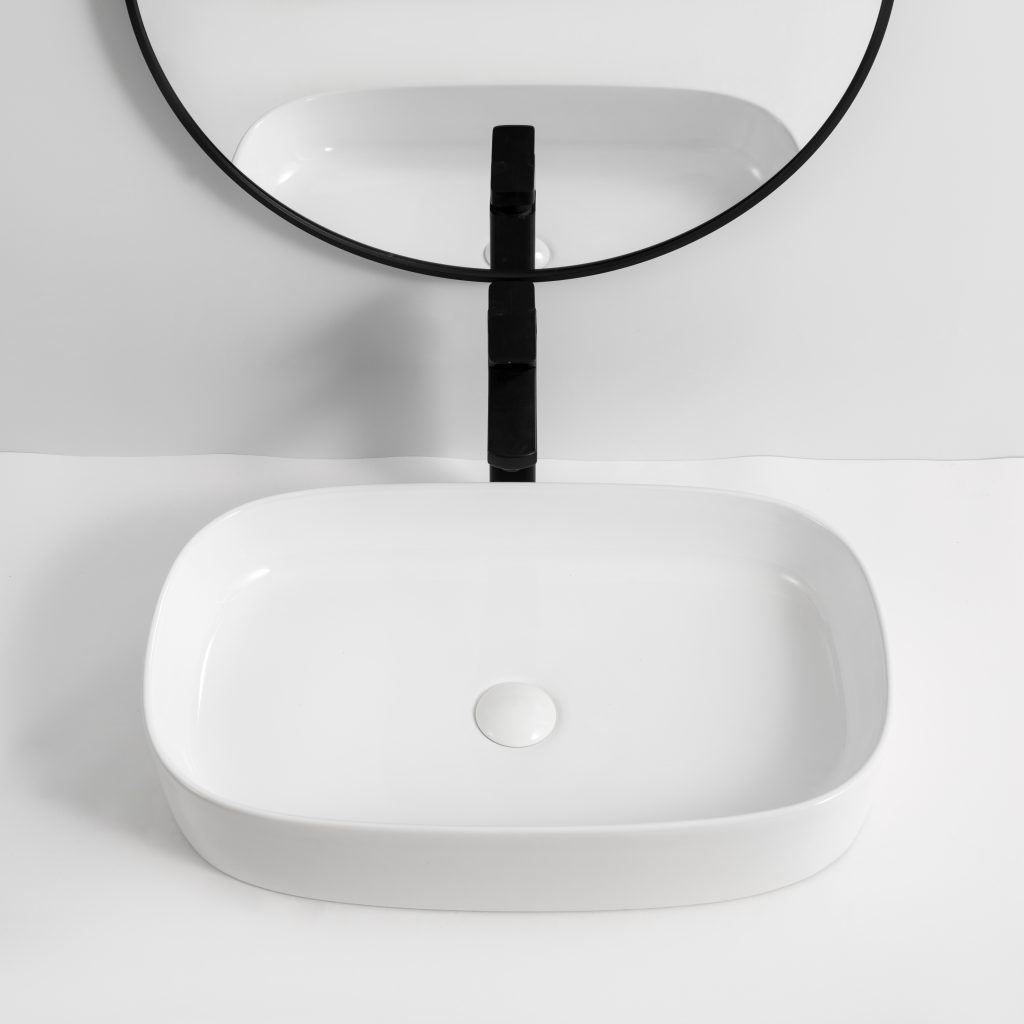
Large Oval Countertop Vessel Basin (580x380mm)
A generous above-counter vessel in smooth glazed ceramic. No overflow; single tap hole centred.
- Pros: Bold visual statement, non-porous glaze
- Cons: Taller tap required
Ideal for: Spacious en suites prioritising a modern bathroom aesthetic.
Corner Ceramic Basin (380x380mm)
Triangular footprint fits unused corner space. Single tap hole, overflow included, gloss finish. Commercially certified sanitaryware should carry verified material safety documentation, particularly where water contact is continuous, as the DWI’s approval framework outlines.
Ideal for: Cloakrooms where straight walls are fully occupied.
Slim Pedestal Ceramic Washbasin (560x430mm)
Classic pedestal mounting conceals pipework neatly. Single tap hole, overflow, gloss white glaze.
- Pros: No vanity unit needed, timeless look
- Cons: Limited storage beneath
Ideal for: Traditional or transitional family bathrooms.
How to Choose the Right Ceramic Wash Basin for Your Bathroom
Selecting the right ceramic wash basin involves more than picking a shape you like. Installation type, tap-hole count, and overflow provision each affect compatibility with your plumbing setup and vanity unit.
Which Basin Style Best Suits Your Bathroom Design?
Rectangular profiles with sharp edges suit modern minimalist schemes, while oval or round bowls soften traditional spaces. A white ceramic wash basin remains the safest choice for most interiors, making rooms feel larger and cleaner. Coloured or textured glazed finishes can work well in bold, design-led bathrooms where contrast is intentional rather than incidental.
Matching Basin Size to Your Room and Vanity Layout
Room Type | Recommended Width | Projection | Installation Style |
|---|---|---|---|
Cloakroom | 350–450mm | Shallow | Wall-mounted or compact countertop |
En suite / standard bathroom | 500–600mm | Medium | Inset or semi-recessed basin |
Large vanity setup | 600mm+ | Deep | Undermount basin or above-counter vessel |
A shallower projection reduces splash in tight spaces, while deeper bowls improve usability on full-width vanity units governed by EN 31 connecting dimensions . For most vanity-unit setups, regulator-approved overflow and outlet configurations remain essential regardless of installation style chosen.
Picking the Right Installation Type for Your Setup
Countertop basins sit above the worktop surface, creating visual impact without structural wall work. Inset basins drop flush into a vanity unit, keeping lines clean and working well with standard UK furniture. Wall-hung mounting frees floor space but requires solid structural support behind the plasterboard. For most vanity-unit setups, regulator-approved overflow and drainage configurations remain essential regardless of installation style chosen.
Ceramic vs Porcelain Wash Basins: Which Is Better for Everyday Use?
Porcelain is essentially a denser, higher-fired form of ceramic. Research confirms that higher firing temperatures produce lower water absorption and greater mechanical strength, making porcelain marginally more chip-resistant. For everyday washbasin use, the practical difference is small; both deliver a non-porous, scratch-resistant glazed surface that performs reliably with proper care.
How to Assess Ceramic Wash Basin Quality Before Buying
Run your hand across the glazed surface: a quality ceramic wash basin feels uniformly smooth with no pitting or rough patches. Heavier basins generally indicate denser, better-fired material. Check overflow openings and tap holes for clean, precise edges. BS 3402 defines accepted tolerances for glazing consistency and permissible defects in vitreous china sanitaryware.
Frequently Asked Questions About Ceramic Wash Basins
Can you pour boiling water into a ceramic sink?
Avoid it. Sudden temperature extremes cause thermal shock, which can crack even a well-fired glazed basin. Run cold water simultaneously to buffer the heat.
Are ceramic basins any good?
Absolutely. A properly fired, non-porous ceramic wash basin resists stains, stays hygienic, and lasts decades. NHS cleaning standards confirm smooth glazed surfaces support rigorous cleaning regimes, reflecting real-world durability.